






A strong core is about more than a flat stomach. It’s the muscles around your midsection that keep you stable when you lift, carry, twist and bend, and they work in almost every exercise you do. Yet ab training is often reduced to a string of crunches at the end of a workout.
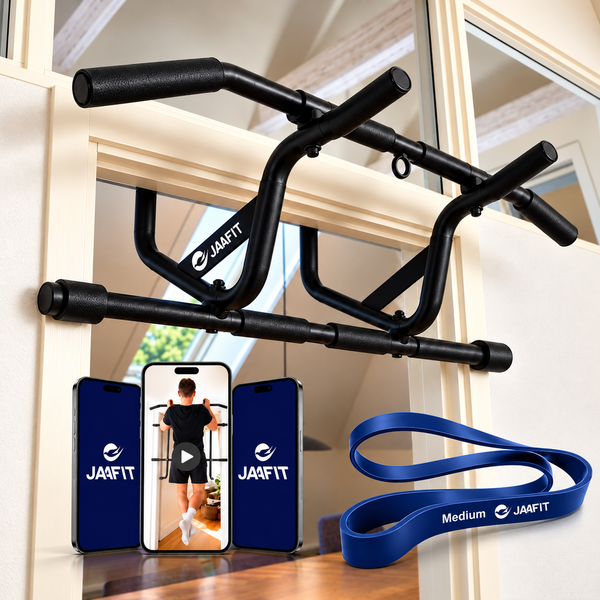
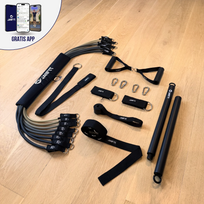
This guide is built around what the core muscles actually do. Some exercises train the ability to keep the body stable, others train rotation, and others hip flexion. If you cover all three, you have a core workout that targets the whole midsection. You can do it all at home with a floor, a band and a Pull Up Bar
What is the core and what do the muscles do?
Core is a collective term for the muscles around the abdomen and lower back. The rectus abdominis runs from the sternum down to the pelvis and is the muscle that becomes a visible six-pack.

On the sides are the obliques, which rotate and bend the torso and resist rotation. Under them lies the deep transverse abdominis, which acts like a corset and stabilizes the spine, and at the back the muscles along the lower back work.
Many look for exercises for the lower abs, but the rectus abdominis is one muscle, so the lower part cannot be trained separately. Exercises where the pelvis and legs move place more emphasis on the lower portion. That is why leg raises feel different from crunches.
Exercises that keep the body stable
The main task of the core muscles is to keep the back stable while the rest of the body works. The exercises here train the ability to resist the lower back arching, and they are a good starting point for all levels. They are done on the floor, so a non-slip exercise mat makes them more comfortable.
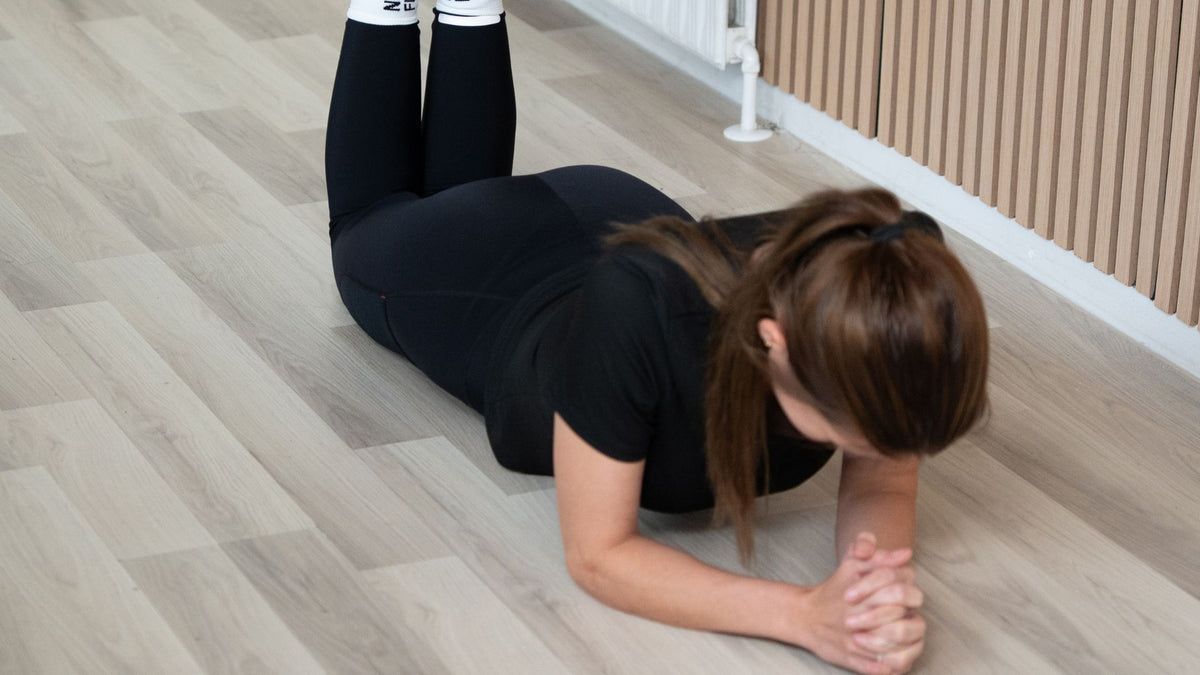
Plank
The plank is the classic stability exercise.

Lie on your forearms with elbows under the shoulders, and lift the body so you form a straight line from head to heels. Brace your abs and glutes, and avoid letting the hips sag or lift. Start with 20 to 30 seconds, and build up as you can hold the position without losing form. A plank exercise is only hard when the technique is correct.
Dead bug
Dead bug is one of the most effective ab exercises for beginners because it teaches you to keep the lower back stable while the arms and legs move.

Lie on your back with arms stretched toward the ceiling and knees bent at 90 degrees over the hips. Press the lower back into the floor, and slowly lower one arm and the opposite leg toward the floor without the lower back lifting. Alternate sides at a controlled tempo.
Hollow hold
Hollow hold is a harder static gymnastics exercise.

Lie on your back, press the lower back into the floor, and lift the shoulders and legs slightly so the body forms a shallow arch. Hold the position with arms extended overhead. If it’s too hard, bend the knees or hold the arms by your sides until you have the strength for the full version.
Exercises against and with rotation
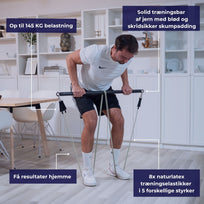
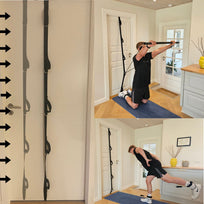
The obliques work both when you twist the body and when you must resist being twisted. Both are important in daily life, and this is where standing ab exercises come in. With resistance bands in a door anchor you get lateral resistance that’s hard to achieve with free weights.
Pallof press
Pallof press is an anti-rotation exercise where the task is to stand still.

Attach the band at chest height, and stand with your side to the anchor point. Hold the band at your chest, and press it straight forward while the band tries to pull you around. Hold for a few seconds with arms extended, then bring it back. The farther you stand from the anchor point, the harder the exercise becomes.
Woodchop
Woodchop trains rotation with resistance.

Attach the band high, and pull it diagonally down across the body with extended arms, as if chopping wood. The movement comes from the hips and torso, not the arms alone. The exercise can also be done from low to high with the band attached low. Both versions and more are described in our guide to band exercises.
Russian twist
Russian twist is done seated on the floor with knees bent and the torso leaned slightly back.

Rotate the torso side to side in a controlled tempo, and keep the spine long instead of rounding it. With feet on the floor the exercise is easier; lifting them makes it harder.
Exercises that flex the hip
The last category is exercises where you flex the hip or curl the spine. Here are the classic ab exercises, and this is also where a pull up bar opens up some of the most demanding exercises you can do at home.
Crunches
Crunches are done lying with knees bent and feet on the floor.

Slowly roll the shoulders toward the pelvis, keeping the lower back on the floor. The movement is short, and the goal is to contract the abs, not to pull yourself up with the neck. Unlike sit-ups, where the whole torso lifts, crunches keep the work in the abdominal muscles.
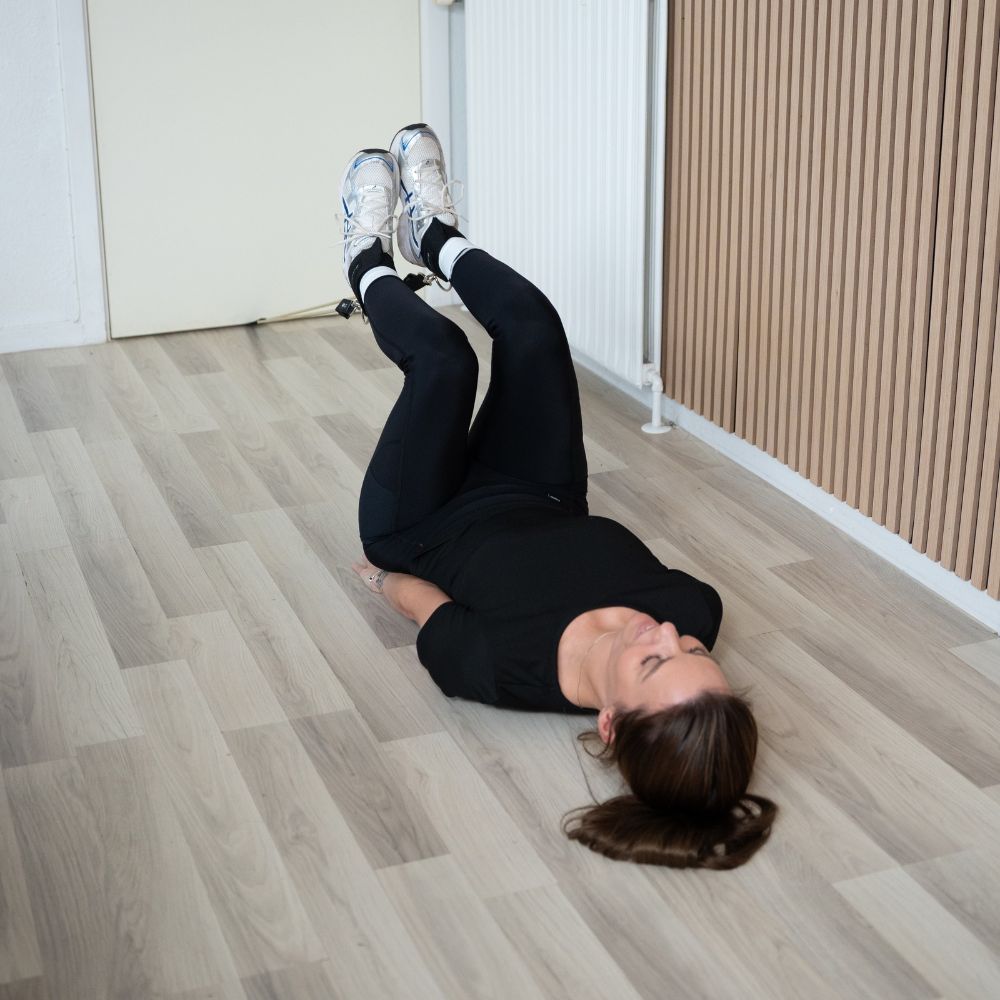
Knee raises and leg raises
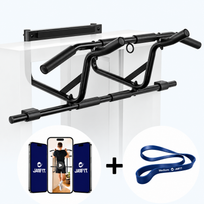
With a pull up bar in the doorway you can do hanging knee raises and leg raises.

Hang from the bar with straight arms, and pull the knees up toward the chest without swinging. When it becomes too easy, do leg raises with straight legs. The important part is to curl the pelvis at the top so the abs, not just the hip flexors, do the work.
Toes to bar
Toes to bar is the advanced version where the feet are brought all the way to the bar.

The exercise requires strong abs, hamstring mobility and a solid grip. Progress via knee raises and leg raises before attempting the full movement.
L-sit
L-sit is done on a dip bar with straight arms.

Lift the legs so they are horizontal, and hold the position with the body in an L-shape. Start with bent knees, and gradually extend the legs as strength increases. The exercise trains abs, hip flexors and shoulders at the same time.
Ab exercises for beginners
If you are new to core training at home, you don’t need to do all the exercises. Choose one exercise from each category, for example plank, pallof press and knee raises, and do two to three sets of each two or three times a week. That way you cover all core muscle functions without spending more than ten minutes.
When the exercises feel easy, make them harder instead of just doing more. Hold the plank longer, stand farther from the anchor point in the pallof press, or progress from knee raises to leg raises. It’s the same principle of progressive overload that applies to all other strength training. Core exercises also fit well into our free home workout program, where the plank is already part of program B.
In JAAFIT Træningsappen the exercise library has its own category for ab exercises, and under pull-up and dip you’ll find videos of knee raises, leg raises and toes to bar so you can see the technique before you start.
Do ab exercises remove belly fat?
No. It’s one of the most widespread myths in training. You cannot burn belly fat by training the muscles under it. The body draws energy from fat stores overall, not from the area you train.
Ab exercises make the abdominal muscles stronger, but whether they are visible depends on how much fat lies over them. A visible six-pack is therefore about your overall body fat percentage, which is affected by diet, activity and full-body strength training. Train your core because it makes you stronger and more stable, and see a flat stomach as a result of the whole picture.


Leave a comment
This site is protected by hCaptcha and the hCaptcha Privacy Policy and Terms of Service apply.