












By Jakob Hansen, Bachelor in Sports Science, AU
The Danish Health Authority recommends that all adults limit their time in inactivity to maintain a healthy lifestyle. This recommendation is based on extensive scientific research that supports the health risks of being inactive for prolonged periods. In this blog post we will examine why inactivity can be harmful to health, and how and why the Danish Health Authority encourages limiting sedentary behaviour.
1. Inactivity and Increased Risk of Chronic Diseases
One of the greatest risks of inactivity is the markedly increased risk of developing chronic diseases. Research shows that people who spend large amounts of time inactive—for example by sitting for long periods—have a higher risk of developing several serious health problems, including:
-
Cardiovascular diseases: Prolonged inactivity has been shown to increase the risk of cardiovascular diseases. According to a large systematic review (Biswas et al., 2015) the risk of cardiovascular disease increases significantly if a person sits for more than 8 hours a day without activity, even if the person later in the day performs physical activity. This is because sedentary behaviour negatively affects blood pressure, cholesterol levels and blood circulation, all of which are risk factors for heart disease.
-
Type 2 diabetes: Physical inactivity is a significant risk factor for the development of type 2 diabetes. When the body is inactive, insulin sensitivity becomes impaired, which can lead to insulin resistance—a central mechanism in the development of type 2 diabetes (Tremblay et al., 2010). This means that inactive people have an increased risk of developing the disease, even if they may not have other obvious risk factors such as overweight.
-
Obesity: When one is inactive for long periods, the body burns fewer calories, which can lead to weight gain and obesity. Sedentary behaviour reduces the body's ability to regulate energy balance, which can lead to excess calorie intake and long-term weight problems (Thyfault & Booth, 2011). Obesity is associated with a range of health problems, including heart disease, type 2 diabetes and certain cancers.
-
Certain types of cancer: Inactivity has also been linked to an increased risk of developing certain types of cancer, especially colon, breast and uterine cancer. Research has shown that sedentary behaviour can lead to an increase in inflammatory markers and insulin resistance, which are risk factors for cancer development (Moore et al., 2016).
2. Inactivity and Mental Health
Inactivity is not only harmful to physical health; it also has a negative effect on mental health. Prolonged sedentary behaviour can lead to an increased risk of mental health problems such as depression, anxiety and stress.
-
Depression and anxiety: Sedentary behaviour is associated with a higher risk of symptoms of depression and anxiety. Physical activity is known to stimulate the production of neurotransmitters such as serotonin and dopamine, which are necessary to maintain a stable mood. The lack of physical activity can therefore lead to lower levels of these substances in the brain, which can increase the risk of developing mental disorders (Rebar et al., 2015).
-
Stress: Prolonged inactivity can also worsen stress levels. Inactivity itself can cause physical symptoms such as muscle tension, headaches and fatigue, which can contribute to increased stress. Physical activity helps regulate the body's stress response and can reduce levels of the stress hormone cortisol, making it easier to handle daily challenges.
3. Inactivity and Muscular Health
An important factor highlighted by the Danish Health Authority is the negative consequences inactivity can have on muscles and bones. By being inactive for longer periods, muscle strength is reduced and bone density falls, which can lead to an increased risk of injuries and reduced functional ability.
-
Muscle atrophy: When muscles are not used regularly, they begin to waste (atrophy). This can lead to weakening of the muscles and reduced functional ability. Muscles that are not activated lose both strength and endurance, which can make it difficult to perform daily tasks and worsen the risk of falls, especially in older people.
-
Bone health: Like muscles, bones also need regular loading to maintain their strength and density. Weight-bearing activities such as walking, running or strength training are essential to prevent bone fragility (osteoporosis). Without regular activity, bones can become brittle and break more easily.
4. The Danish Health Authority's Recommendations and the Effect of Inactivity
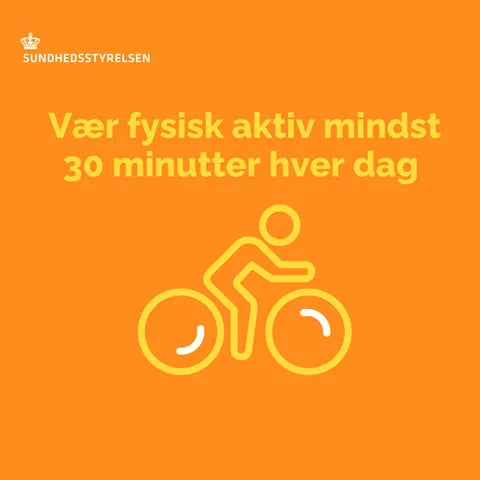
The Danish Health Authority emphasizes the importance of limiting inactivity to maintain good health. Studies have shown that it is not only the amount of activity that matters, but also how much time one spends in inactivity. It has become clear that inactivity in the form of sitting for long periods without physical activity—also called sedentary behaviour—can have serious health consequences, even when one gets the recommended amount of physical activity of 30 minutes a day.
The Danish Health Authority recommends reducing the time spent in sedentary behaviour, such as sitting in front of the computer, the TV or driving for long periods. Attempts to integrate small physical breaks into everyday life can have major health benefits. For example, taking a short walk every hour, standing up and stretching or using a standing desk are simple strategies that can help reduce the negative effects of inactivity.
5. How Do You Limit Inactivity?
Limiting inactivity does not necessarily require major changes to your daily routine, but small measures that can make a big difference in the long term:
-
Take breaks from sitting: If you work at a desk, you can take a short break every hour where you stand up, stretch or take a short walk.
-
Use active transport: If possible, walk or cycle instead of driving, and use the stairs instead of the elevator.
-
Include physical activity in social activities: Meet friends or family for a walk instead of meeting over coffee, or choose to play sports as a social activity.
-
Change position regularly: If you have to sit for longer periods, change position often and try to stand up or walk around a bit during the day.
Conclusion
The Danish Health Authority's recommendation to limit inactivity is not without reason. Scientific research has clearly documented the health risks of spending too much time inactive, including increased risk of chronic diseases such as cardiovascular disease, type 2 diabetes and obesity. It is therefore important to find ways to move and limit the time spent sitting still. Good habits, such as taking small breaks from sedentary activities and finding time for physical activity, can have a positive effect on both your physical and mental health and contribute to a longer and healthier life.
Sources:
-
Biswas, A., et al. (2015). Sedentary time and its association with risk for disease incidence, mortality, and hospitalization in adults. Annals of Internal Medicine, 162(2), 123-132.
-
Tremblay, M. S., et al. (2010). Sedentary behaviour and obesity: critical issues in understanding the biology of inactivity. Applied Physiology, Nutrition, and Metabolism, 35(6), 757-762.
-
Moore, S. C., et al. (2016). Physical activity and the incidence of cancer: a systematic review and meta-analysis. European Journal of Cancer, 61, 207-219.
-
Rebar, A. L., et al. (2015). The effects of physical activity on depression and anxiety. Mental Health and Physical Activity, 9, 1-12.
-
Thyfault, J. P., & Booth, F. W. (2011). Lack of exercise is a major cause of chronic diseases. Comprehensive Physiology.



Leave a comment
This site is protected by hCaptcha and the hCaptcha Privacy Policy and Terms of Service apply.